
Rome Resident Records by Source
Each official record answers a narrow question. Floyd County QPublic can tie a name to parcel ownership, but it cannot prove who occupies the home. A deed can show how a person acquired or conveyed land. Court and probate indexes place a person in a case role at a certain time. Georgia voter data can support a residence match, though access and use are tightly controlled. Vital certificates have the strictest eligibility rules. A sound Rome resident lookup treats these as separate pieces of dated evidence.
| Record | What It Confirms | Where to Search | Access |
|---|---|---|---|
| Property roll | Owner, situs and mailing address | Floyd QPublic | Free; occupants omitted |
| Voter record | Registration, residence and districts | My Voter Page or ordered list | Identity-gated or paid; use restricted |
| Court case | Party role, filing and disposition | Relevant Floyd clerk or PACER | Public portions; some files restricted |
| Probate | Decedent, fiduciary and heir trail | Georgia Probate Records | Online from 2006; attachments may be closed |
| Vital record | Birth, death, marriage or divorce event | Georgia DPH and Floyd custodians | Years and eligibility vary |
| Business or license | Public role, credential and status | Georgia SOS searches | Free individual search |
Begin with the record closest to the fact already known. Use an owner name or address in Floyd QPublic. Use a deceased relative's name in the probate index. A business name belongs in the corporations search, while a profession belongs in the license verifier. Save any parcel number, case number, control number, or filing date. Those identifiers are much safer than matching on name and city alone.
Checking Rome Court Name Records
Rome cases are split among Municipal Court and Floyd County Magistrate, Probate, State, Superior, and Juvenile courts. The court that made the file keeps it. The Georgia Courts e-access directory sends listed courts to different providers, but Floyd did not appear in the inspected participant table. Do not assume that one statewide form searches every local case. For Floyd Superior Court, call the Clerk at 706-291-5190 and ask which terminal or provider covers the case type.
| Search item | How it helps |
|---|---|
| Party or participant name | Find surname, initials, aliases, and organizations separately |
| Case number | Retrieves the most exact file match |
| Case type | Separates civil, criminal, domestic, and other divisions |
| Filing date range | Narrows people who share a name |
| Court | Directs the request to the actual custodian |
A public docket may show the case number, filing date, party roles, attorneys, judge, events, hearings, status, disposition, and document labels. It may not include sealed material, juvenile files, adoption records, protected victim data, or every image. Ask for the docket sheet first, then name the orders or pleadings needed. Archived files can take added retrieval time.
Verify a Rome Resident Match
A shared name and city are not enough. Normalize suffixes, initials, maiden names, prior names, compound surnames, and likely spelling variants. Rome has many residents whose names may appear in more than one order or without marks used in the original spelling. Older OCR can also split or misread a surname. Require two independent anchors, such as the same legal parcel plus a spouse, or the same middle initial plus a matching time and place.
- Anchor the name to a dated address through QPublic, a deed, or a lawfully accessed voter record. Record both situs and mailing addresses.
- Search the proper court by full name, initials, and variants. Compare dates, roles, and case type rather than relying on the result headline.
- Check probate, marriage, divorce, business, or license data for a second fact that independently matches.
- Request the underlying file or a certified copy from its custodian when the distinction matters.
- Docket
- The dated list of filings and events in a court case.
- Index vs image
- An index points to a record. An image shows the filed document itself and may have a fee.
- Certified copy
- A custodian-issued copy bearing official proof that it matches the record held.
For federal cases involving Floyd County, PACER searches by party or case number. The Northern District of Georgia covers Floyd County. PACER charges by page for most access, so note the docket number and document number before ordering a file.
Rome Probate Trails Locate Heirs
Probate is a strong official path when the search concerns a deceased Rome resident or an estate. A Floyd estate can identify the decedent, petitioner, personal representative, and later public notices. Recorded estate deeds may then show how land passed to an heir or buyer. The Floyd Probate Court links to Georgia Probate Records, whose stated online Floyd coverage begins in 2006. Older matters and protected attachments require a clerk request.
The useful sequence is estate index, petition or docket, public notice, and deed index. Relationships must come from the filed record, not from a guess based on address or surname. Adoption and birth-parent inquiries follow Georgia's official confidential adoption-reunion process through state agencies, not a restricted birth-certificate search. This human-use route keeps the resident lookup tied to records made for the estate.
The Floyd Probate Court screen shows where the county directs researchers for probate files.
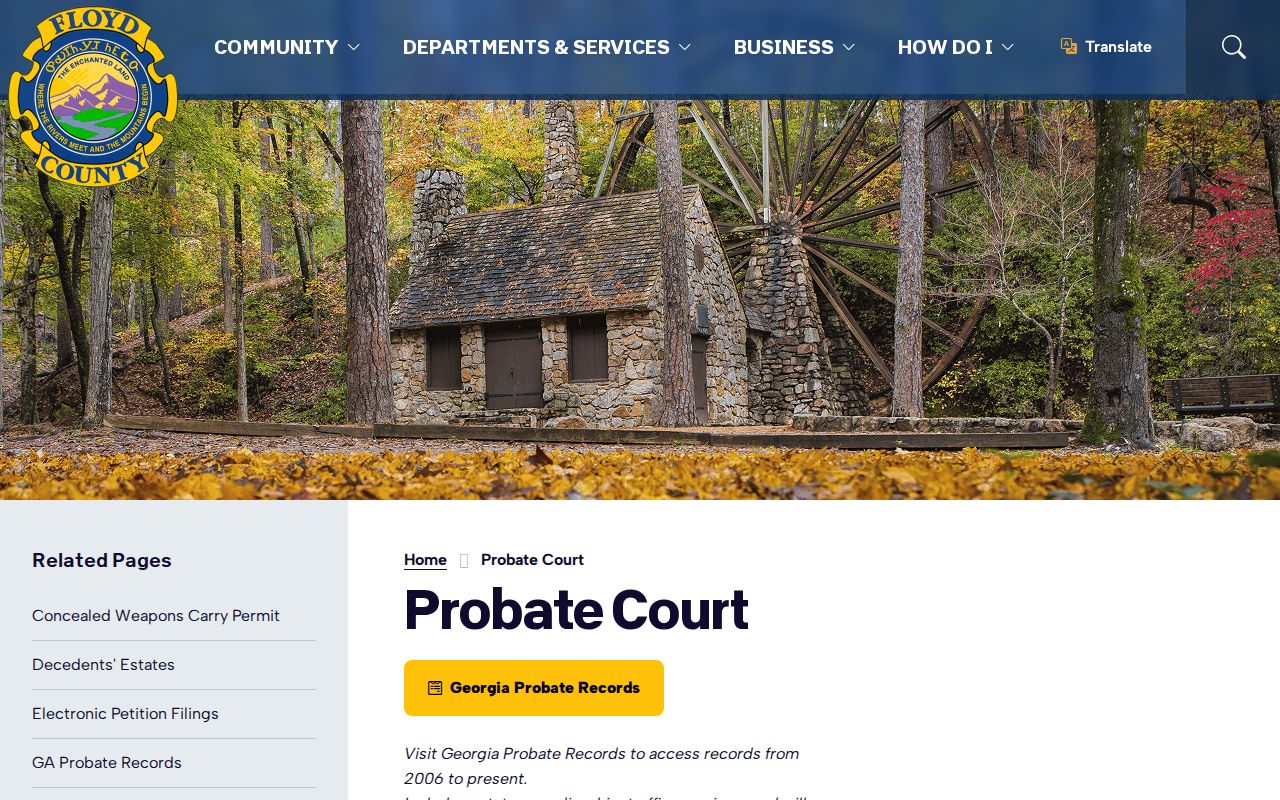
The county page is the right checkpoint for clerk contacts and the linked 2006-present public index.
Rome Vital Records Have Boundaries
Georgia DPH holds birth and death records from January 1919, marriage records from 1952 through 1996, and divorce verifications from June 1952 through August 1996. Floyd Probate Court handles marriages issued there before 1952 and after 1996. The Floyd Superior Court Clerk keeps the actual decree for a Floyd divorce. A DPH verification is not the signed decree.
Birth and death certificates are not open name indexes. Under O.C.G.A. §31-10-25, certified access is restricted to the registrant, qualifying family, or a legal representative with identification and proof when needed. Requests can be made online, by mail, or in person. Regular online service is stated at two to four weeks, expedited service up to five business days, mail at eight to ten weeks, and walk-in service generally the same day when available.
The Georgia DPH fee page helps an eligible requester confirm the current search and copy cost before applying.
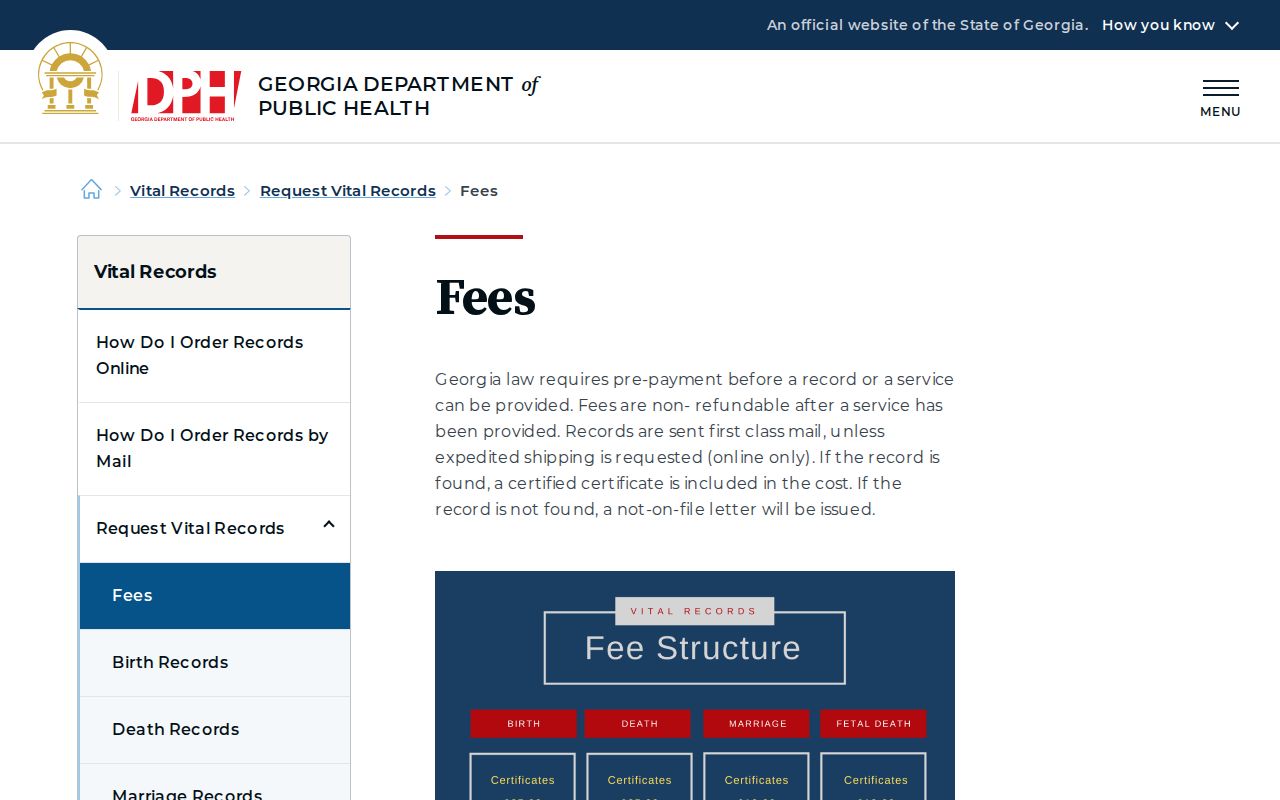
The screen also reinforces that a paid search can produce a not-on-file letter rather than a certificate.
The broader Georgia vital-record overview shows eligible Rome requesters how online, mail, and office channels fit together.
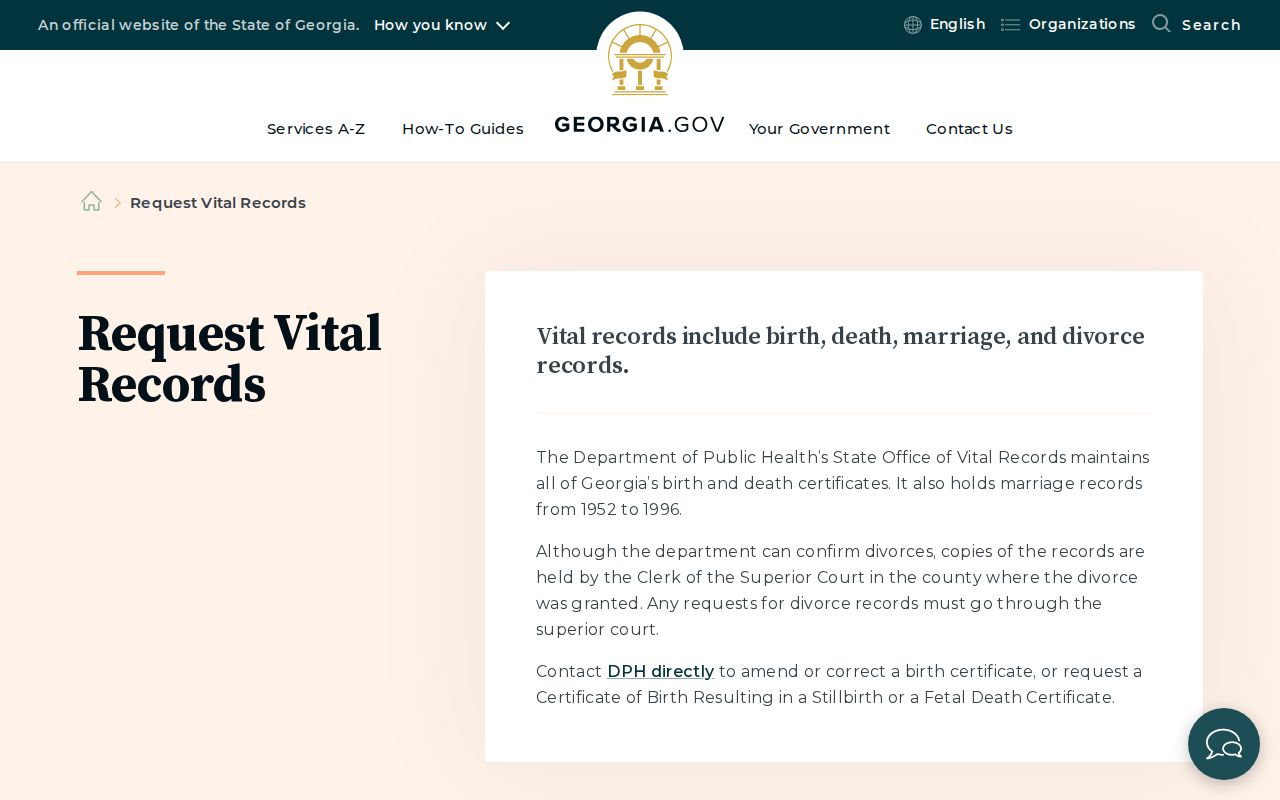
Use that route to select the record first, then confirm whether Floyd Probate Court or Superior Court holds the local document instead.
For a Floyd marriage license, Probate Court uses appointments at 706-291-5136. Issuance hours are Monday through Friday, 8:15 a.m. to 4:30 p.m., with arrival before 4:15. The researched fee is $66 without certified premarital counseling or $26 with it. These are license-issuance facts, not proof that a named resident married.
The Floyd marriage-license page is the official checkpoint for appointments, identification, and current issuance details.
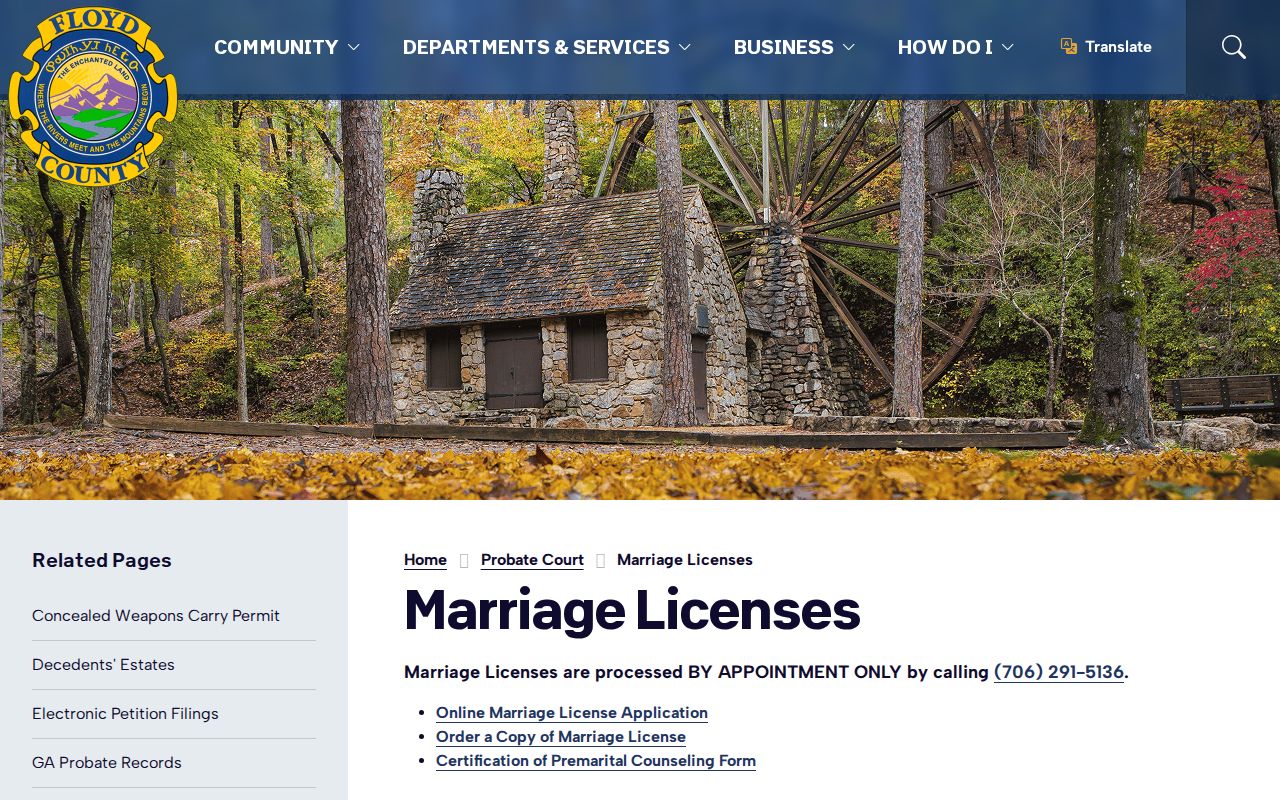
A license-process page is not a searchable marriage roster, so obtain the index or certificate from the correct custodian for the relevant year.
Confirming Rome Voter Status
Georgia My Voter Page is a personal lookup, not a public name browser. It asks for first initial, last name, county, and date of birth. A match may return registration status, registered address, polling place, precinct, districts, sample ballot, and absentee status. The full voter file is a separate paid product delivered by email after an order that SOS says takes about two weeks.
The voter file includes more than forty location, status, and district fields. It separates residence from mailing address and omits phone number, full birth date, Social Security number, and driver-license number. Georgia does not register voters by political party. A “Last Party Voted” field reflects primary participation, not membership or a ballot choice. O.C.G.A. §21-2-601 makes commercial use of the elector list a misdemeanor.
VoteSafe can shield a qualifying registered voter's residence address when that person is under a qualifying protective order or lives in a family-violence shelter. Contact SOS Elections at 404-656-2871 or the Floyd registrar for the application route.
Note: A missing My Voter Page match may reflect an input error or status issue, so contact elections before drawing a conclusion.
Rome Names in State Filings
The Georgia Corporations Division search can match a person listed as a registered agent or officer. Search controls include business name, control number, registered agent, officer, and designated agent, with starts-with, contains, or exact modes. Results can show legal name, status, formation details, office addresses, roles, and filing images. The database is updated daily, but pending applications do not appear.
The professional license verifier checks individual credentials by name and supports wildcards. A result may show license number, status, issue and expiration dates, profession, and discipline. It does not establish a home address. Rome's health care, trades, education, and service economy makes these sources useful for separating same-name people by public role.
Use each affiliation as one anchor. A business address could be an office, registered-agent address, or principal office. It should not be relabeled as a residence.
Another official name clue is Georgia's Unclaimed Property Program, which lets a person search for property reported to the state.
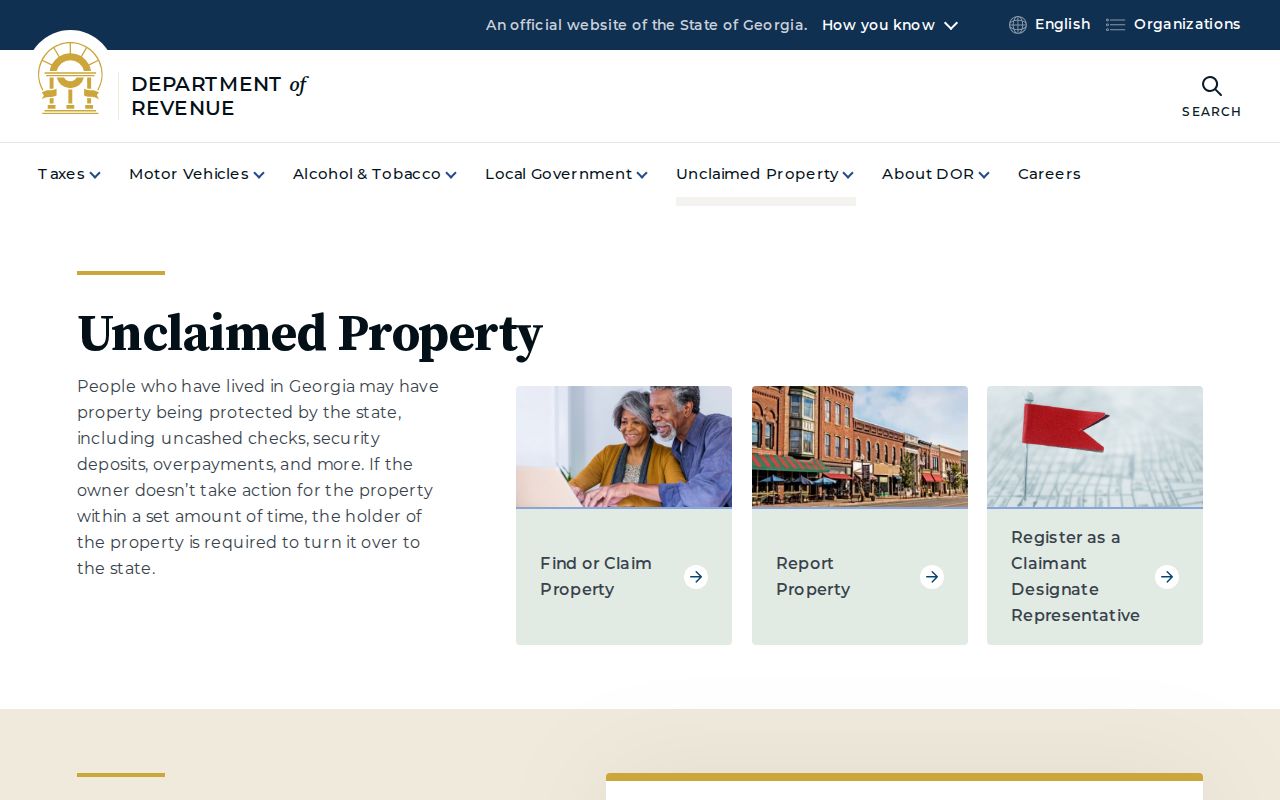
An unclaimed-property match is a claim lead, not current-residence proof; file only through the official state process and verify identity as required.
When Rome Lookup Portals Stop
Electronic gaps do not mean a file does not exist. Call or visit the clerk that made the record, request a docket sheet or index entry by mail, or submit a focused request under the Georgia Open Records Act, O.C.G.A. §50-18-70 et seq. The Act generally requires a response within three business days and permits reasonable search, redaction, inspection, and copy charges.
Ask for an existing index or export, not a report the office would have to create. Give the full name, variant spellings, record type, date span, and any case or parcel number. Request electronic delivery and a cost estimate. Older Rome material may move from the courthouse to the Rome-Floyd Library Heritage Room or Georgia Archives. The City Archive Center also searches names across city minutes and departmental PDFs by keyword, category, and date.
Corrections belong with the source custodian. Ownership issues go to the Assessors, deed-index errors to the Clerk, voter records to the registrar or SOS, vital amendments to DPH, and license data to the licensing board.
Legal Limits for Rome Lookups
A Rome resident lookup never overrides a sealed court file, juvenile or adoption confidentiality, vital-record eligibility, VoteSafe protection, or the federal limits on motor-vehicle data. Public access also does not authorize entry into an account, impersonation, threats, surveillance, or repeated unwanted contact. Georgia stalking law appears at O.C.G.A. §16-5-90 et seq., and harassing communications at §16-11-39.1.
Commercial people-finder products compile public, marketing, and user-supplied facts. Their profiles may be stale or merge two people. Use the service's own privacy page to request removal, keep the confirmation, and check again later. That step does not delete an official deed or court index. To redact or correct an official record, use the process offered by its custodian.
Lawful use. Use Rome records only for lawful personal research. Never use a name, address, or protected location to stalk, harass, threaten, or intimidate anyone.